Case Studies · The First Class Driver
The website that runs itself.
The First Class Driver is a family-run luxury chauffeur service in Anchorage: Lincoln Navigators, a Mercedes Sprinter, cruise transfers to Seward and Whittier, private Denali tours. Northtek rebuilt their web presence into something no template shop can offer: a first-class marketing site, a staff of six AI employees that work it around the clock, and an owner dashboard where nothing goes live without the owner's approval.
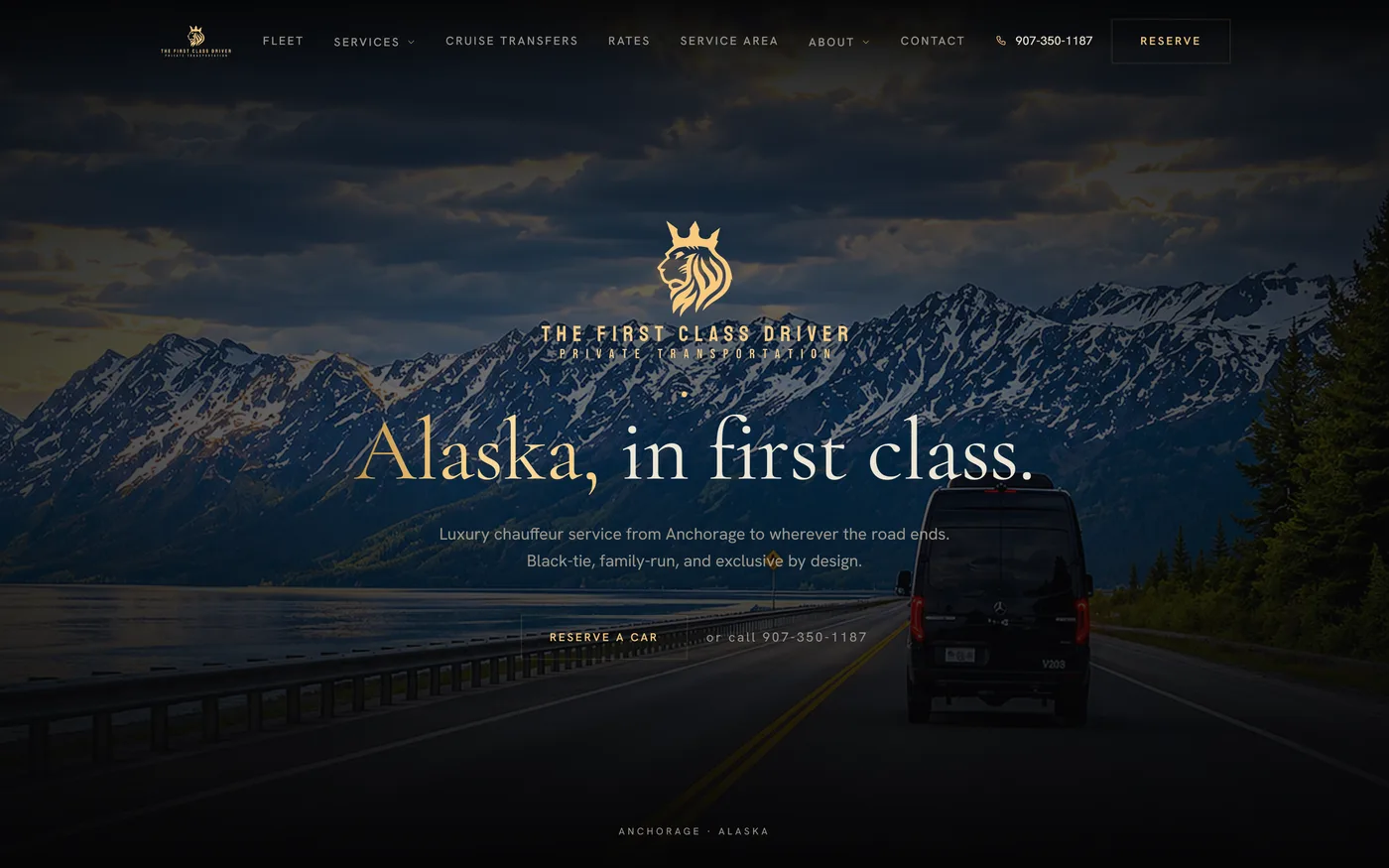
The Brief
A five-star service with a site-builder website.
Jason Anderson runs the kind of service Alaska visitors write home about: black-tie chauffeuring, flight-monitored airport pickups, every bag handled, water in view the whole drive down the Seward Highway. His Google reviews sit at 5.0. His website did not match any of that: a generic site-builder page that undersold the service, ranked poorly, and depended on someone finding time to update it.
The ask went beyond a redesign. A luxury brand needs fresh, accurate content to compete in search, and now in AI answers too. Jason drives for a living. He does not have hours to write blog posts, audit page metadata, or check whether ChatGPT recommends his company. The site had to do that work itself, and it had to do it without ever publishing a word he had not read.
The Transformation
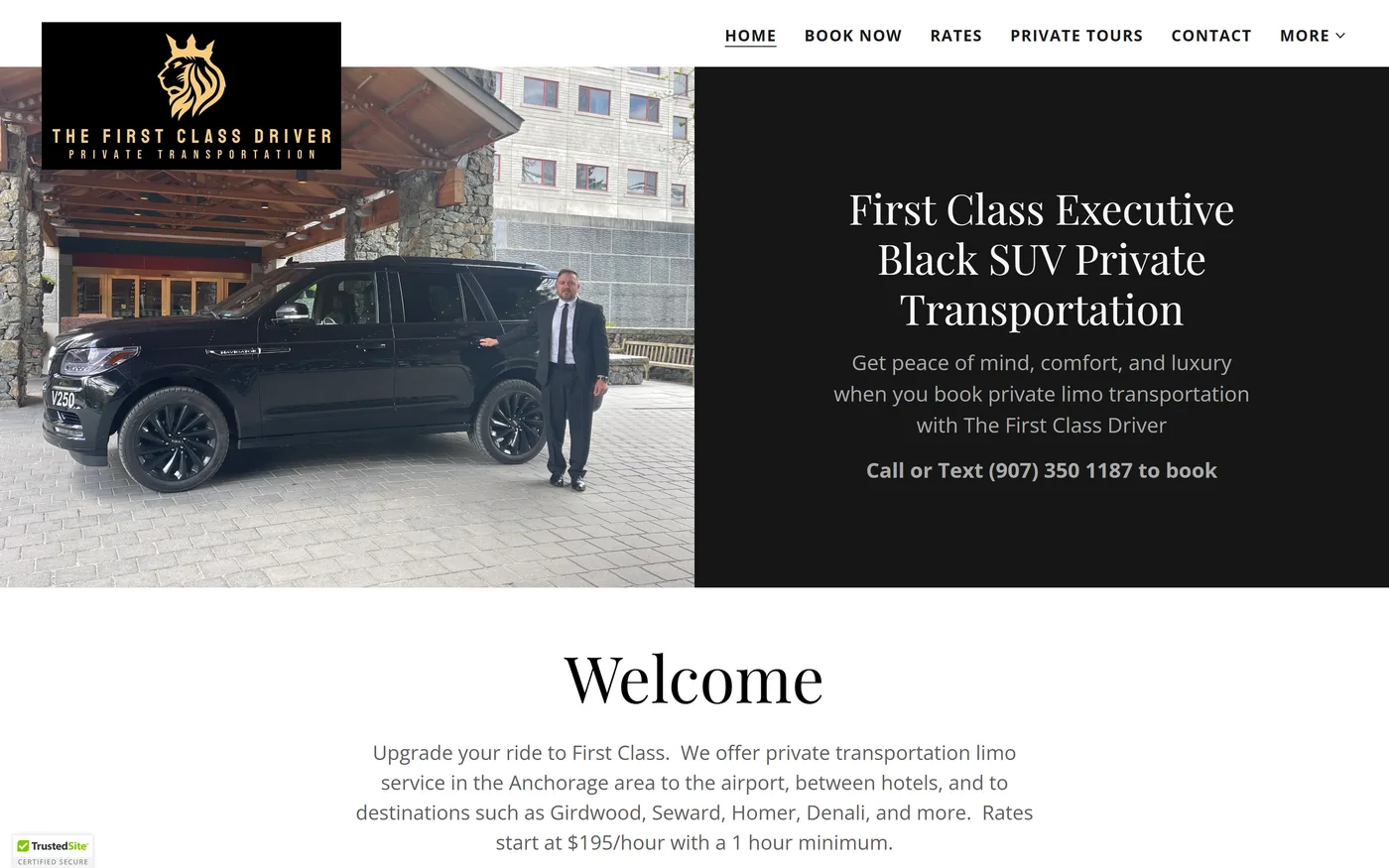
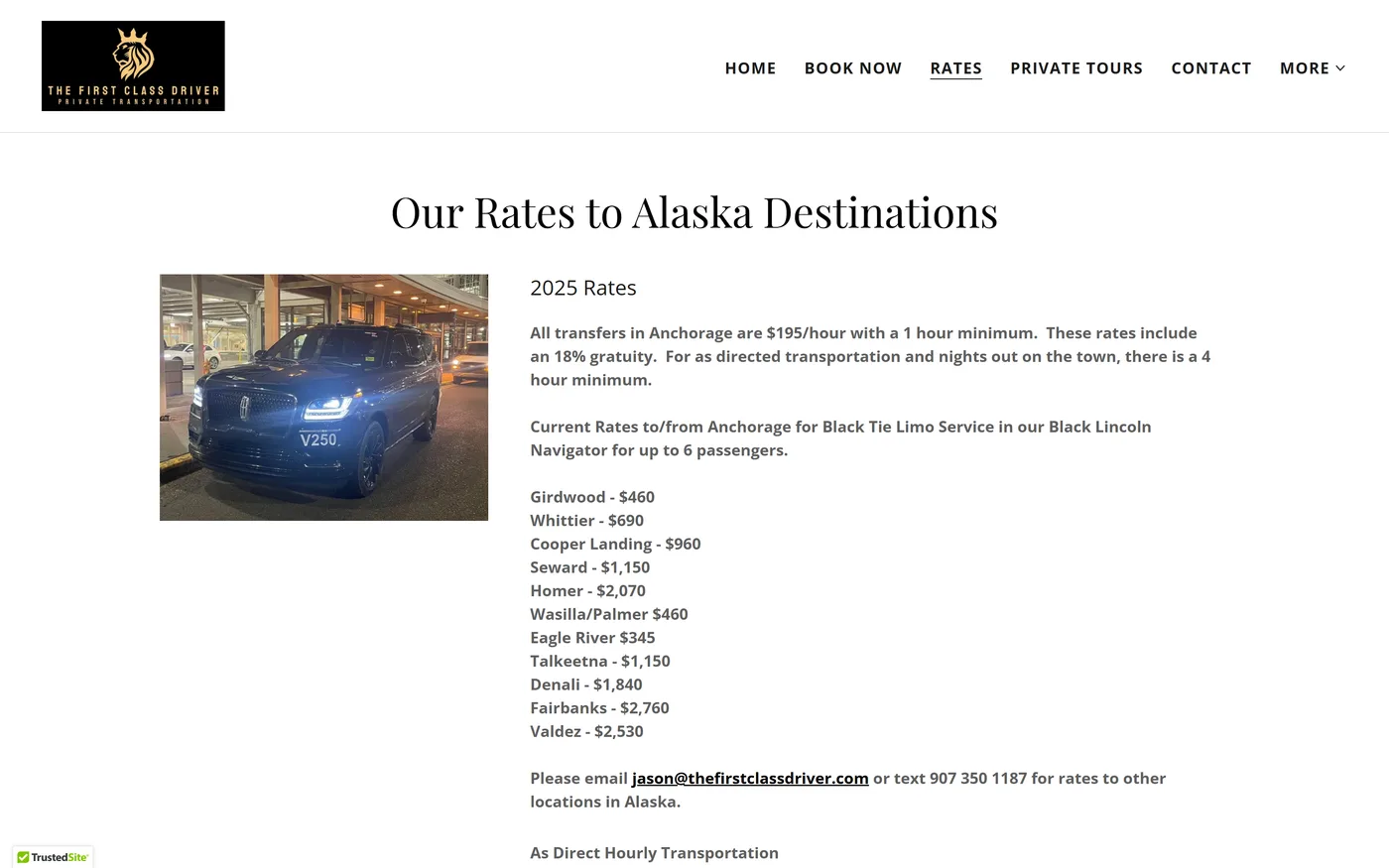
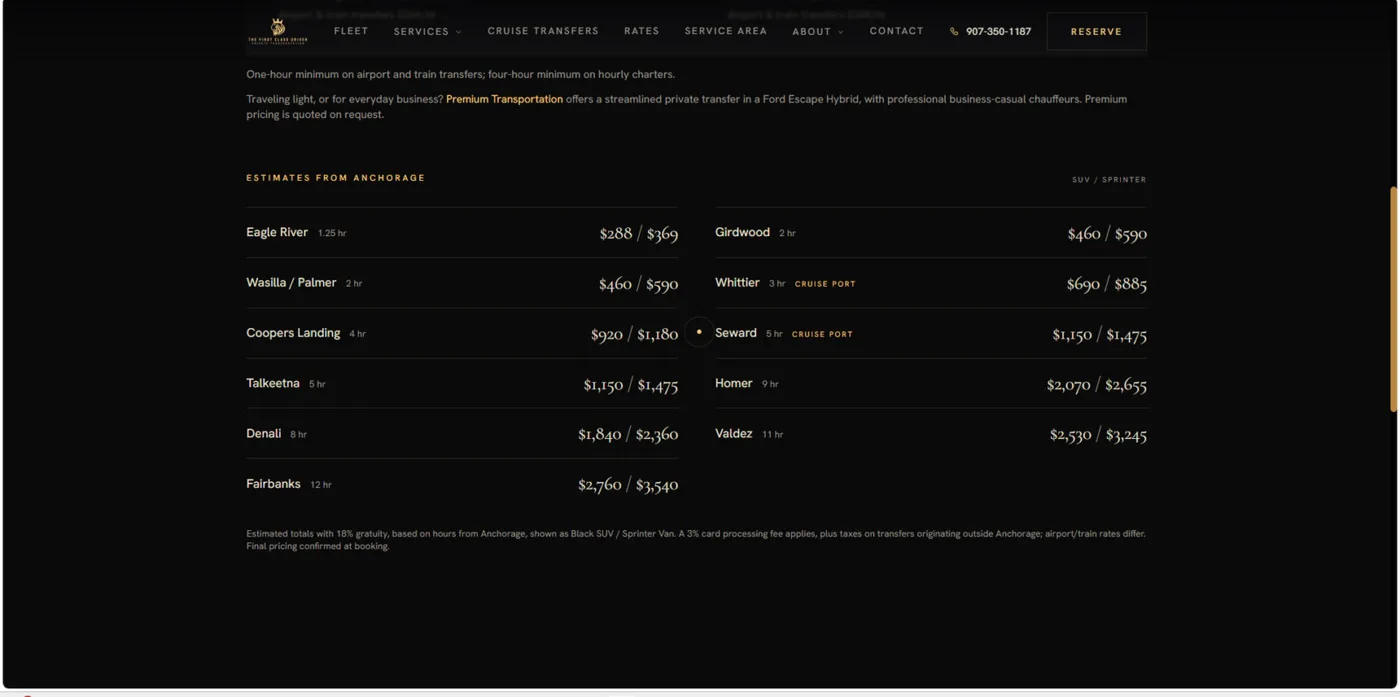
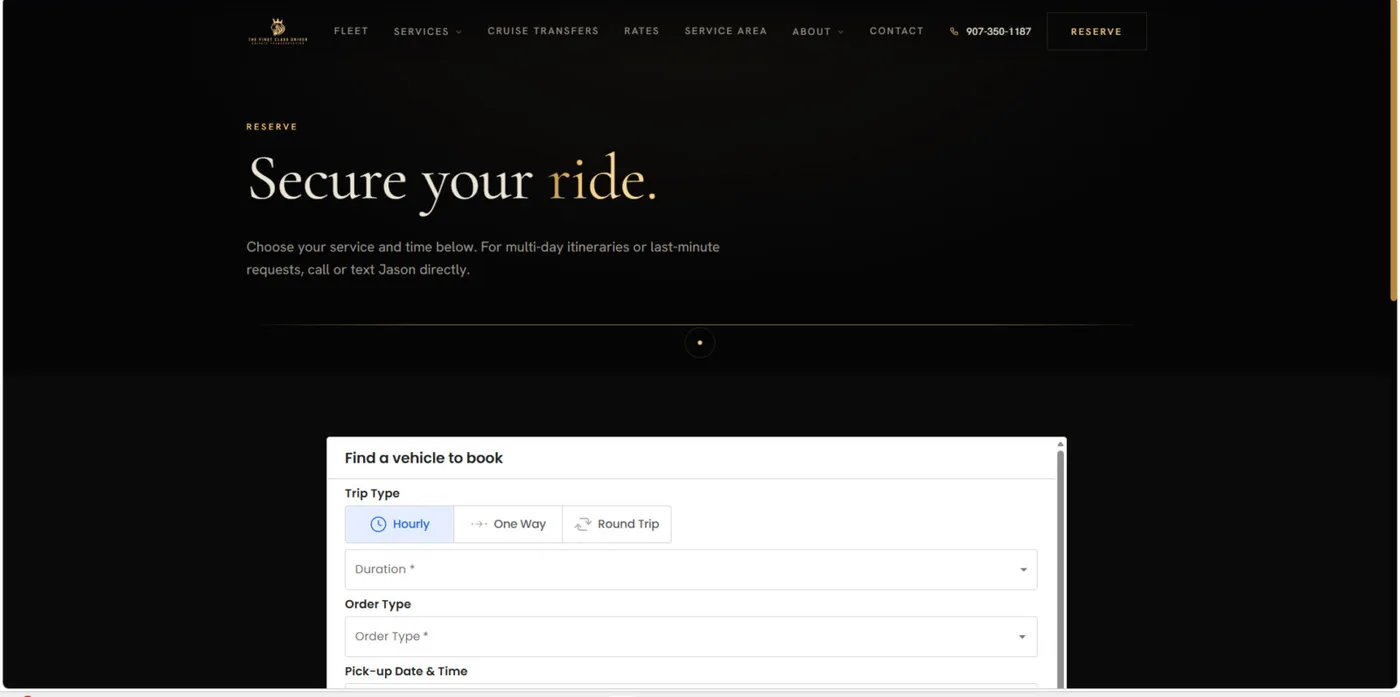
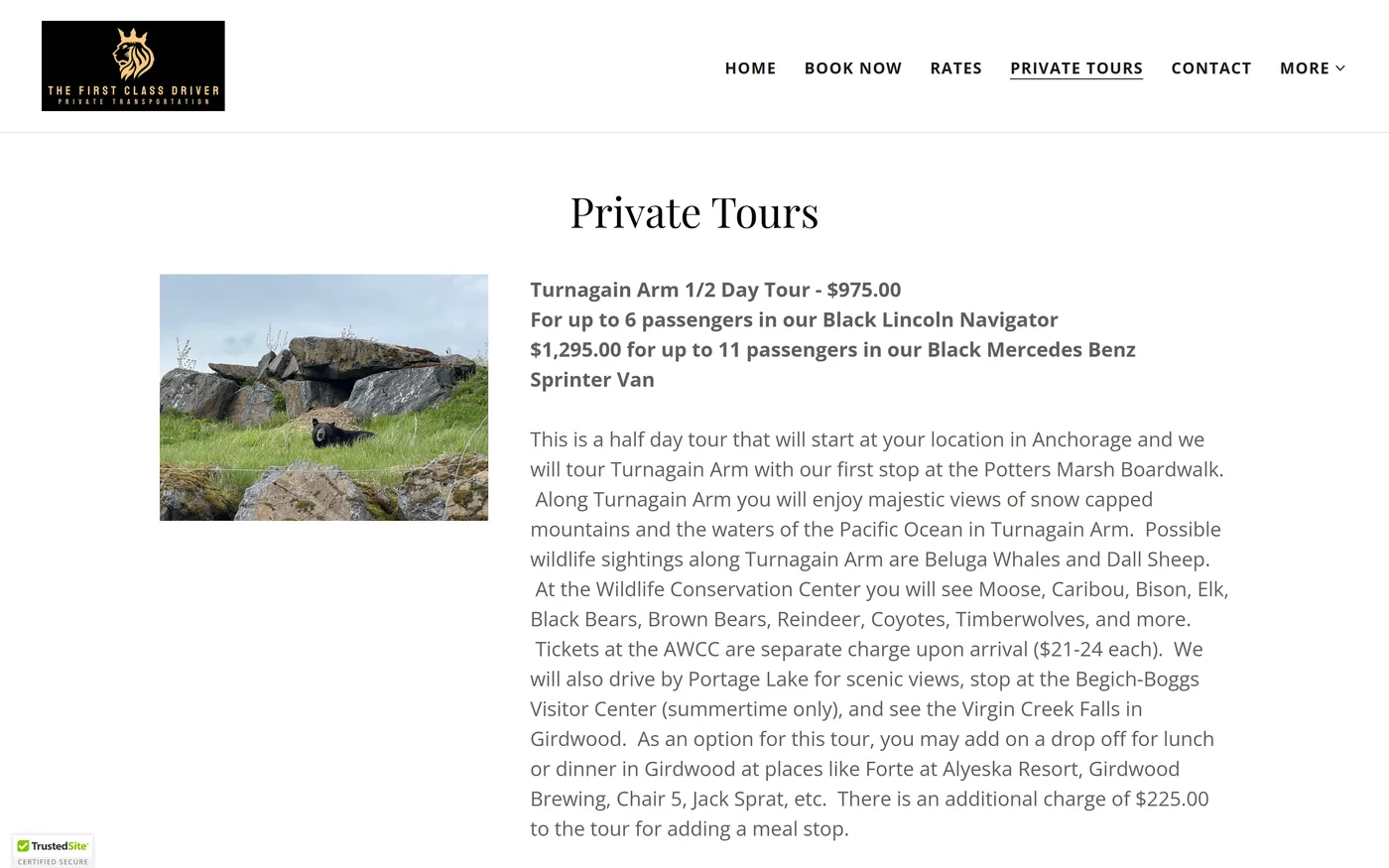
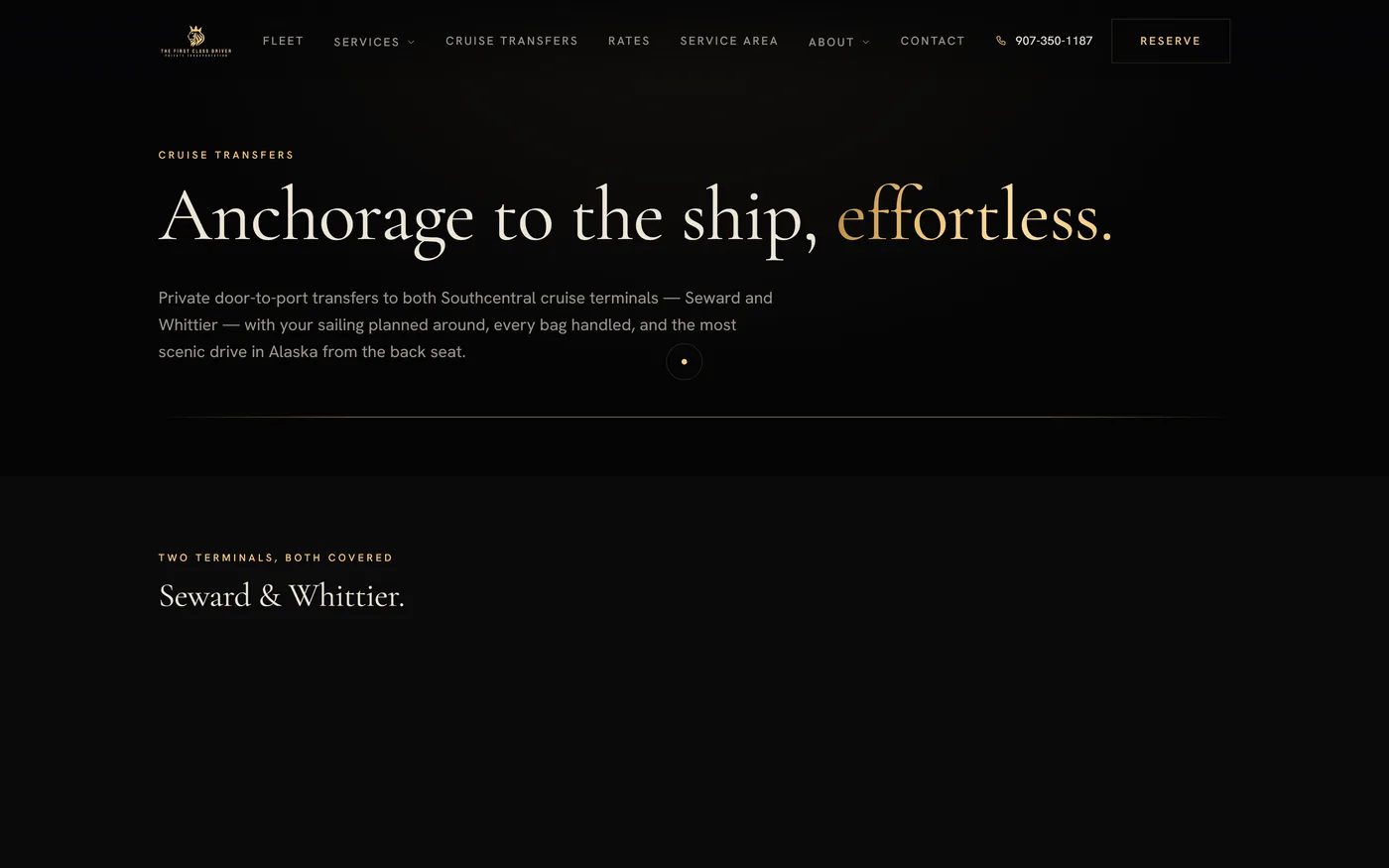
Before and after, page by page.
Same business, same phone number, same 5.0 rating. What changed is everything a traveler sees and everything a search engine reads.
Rates
Booking
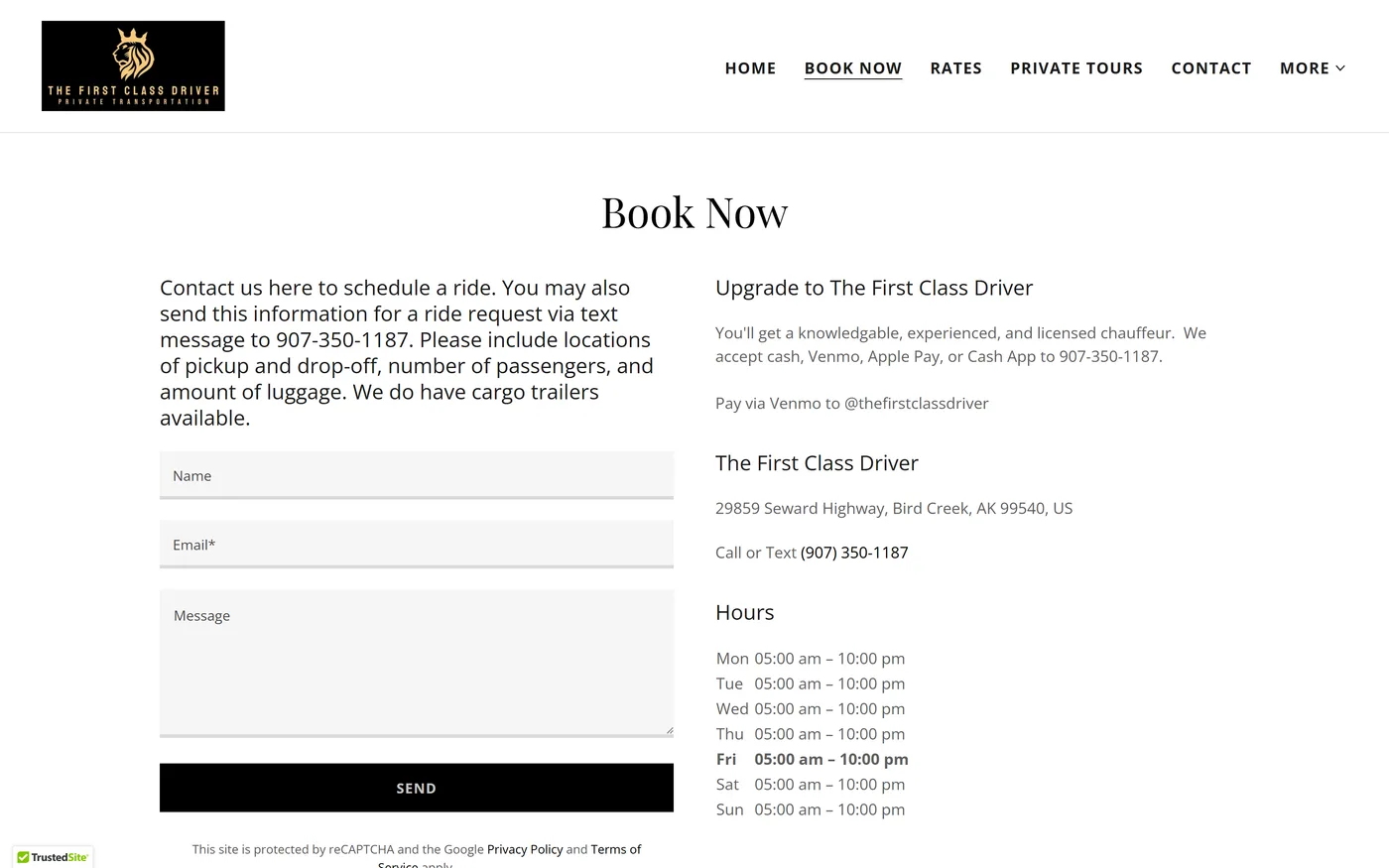
Tours & Cruise Transfers
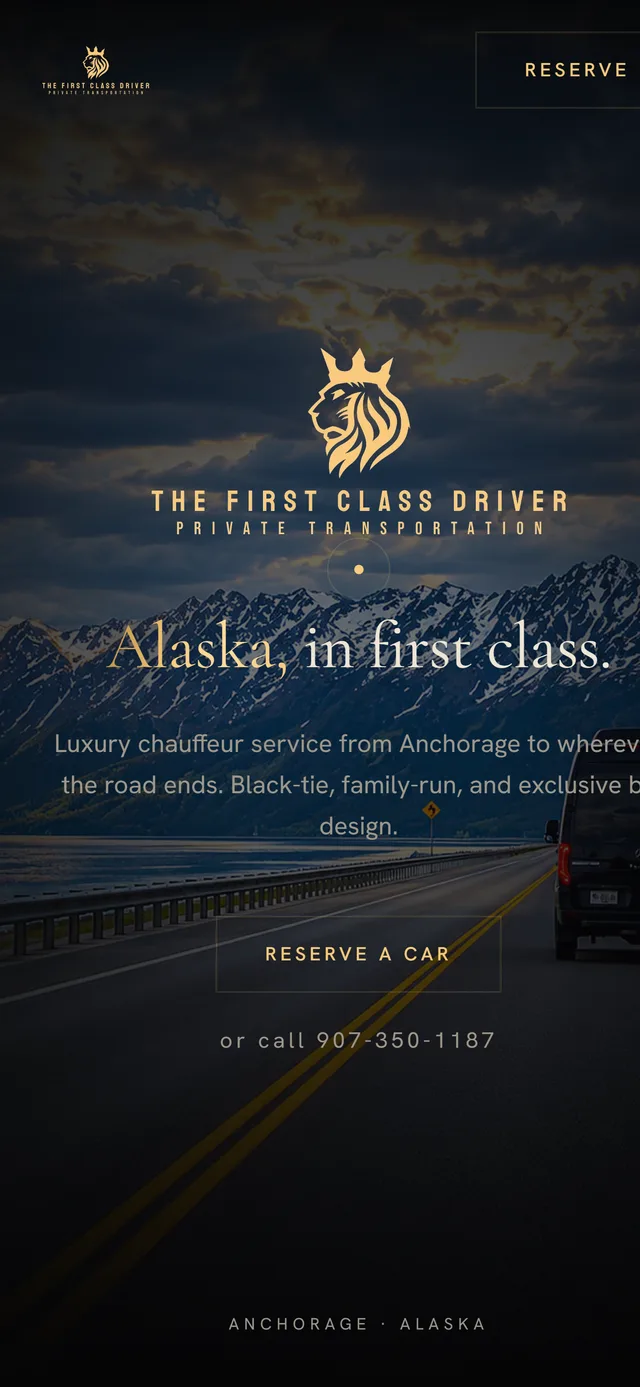
On a phone, where travelers actually book

Part One
A front door worthy of the fleet.
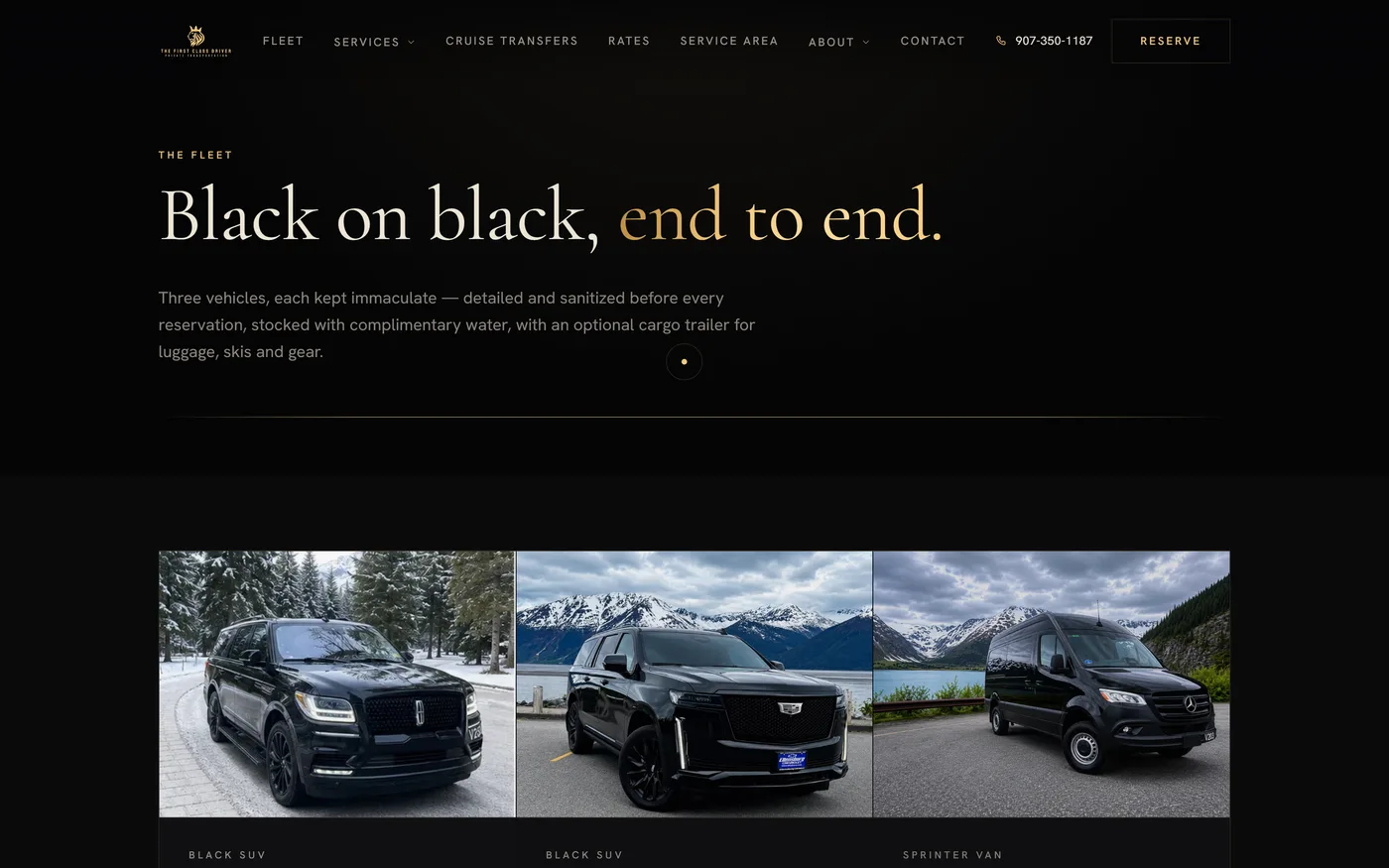
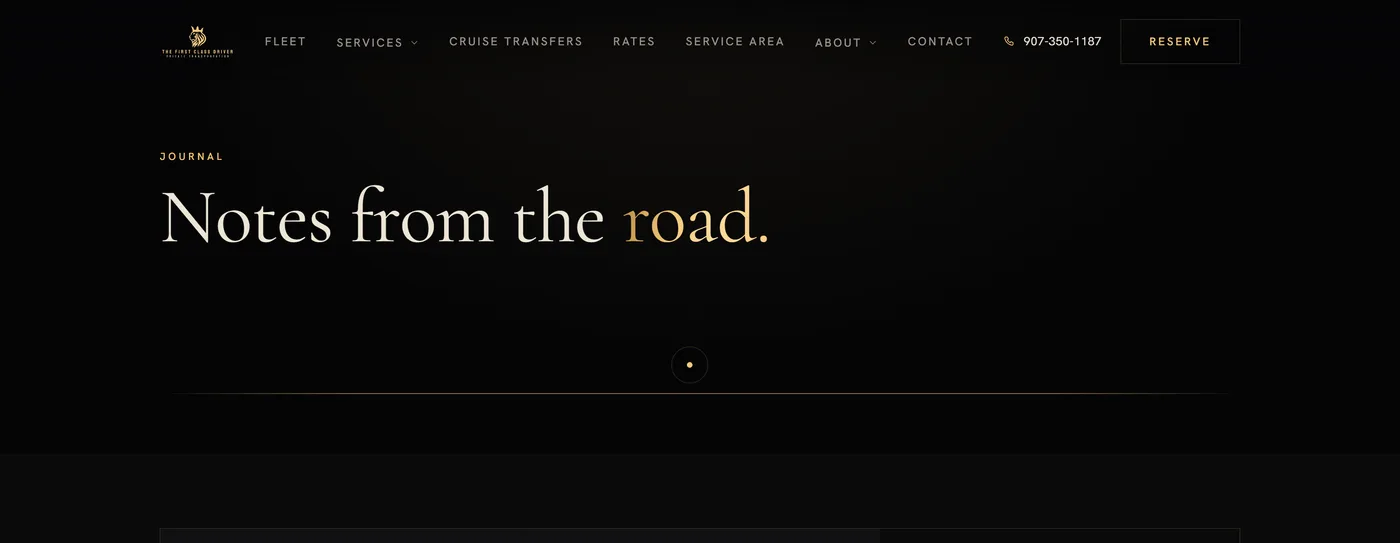
Black and gold, serif headlines, real photographs of the actual vehicles. Sixty pages engineered around how travelers actually search: cruise transfer routes, destination guides, transparent rates with per-vehicle pricing, and verbatim five-star Google reviews. Every page ships structured data so search engines and AI assistants read it as cleanly as humans do.
Part Two
Six employees who never sleep.
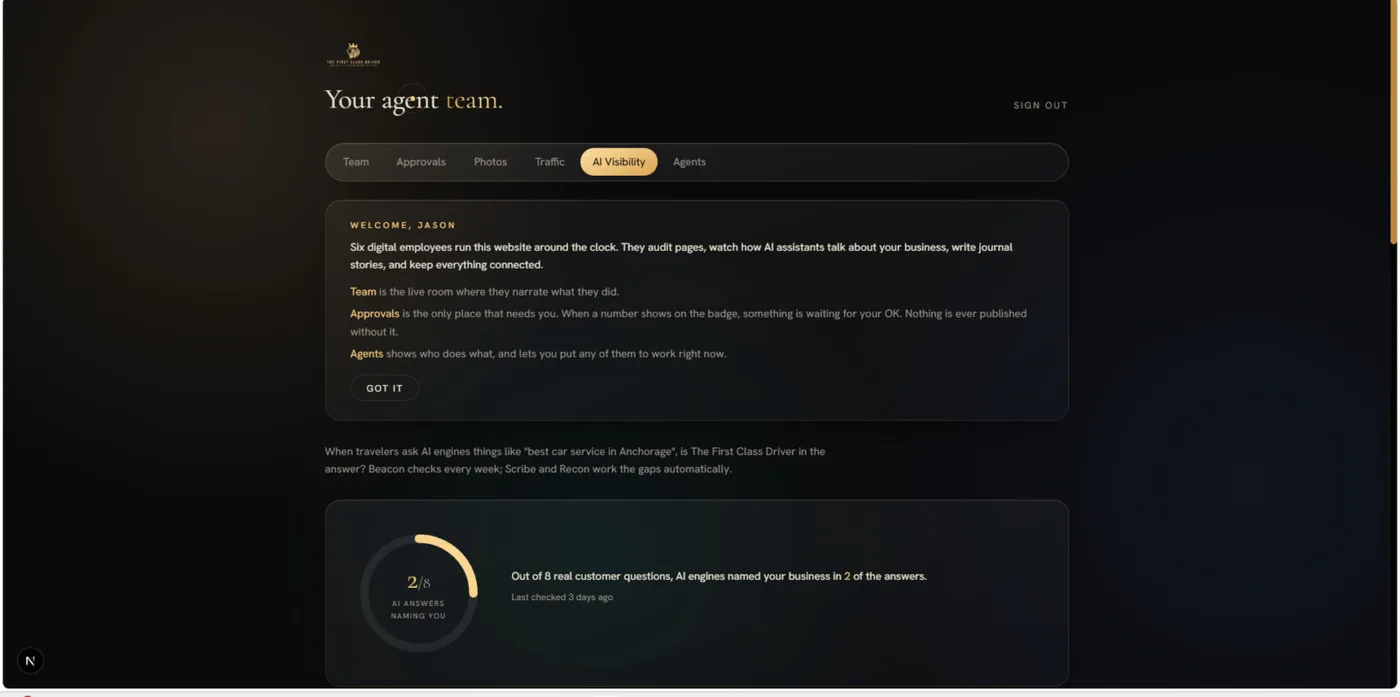
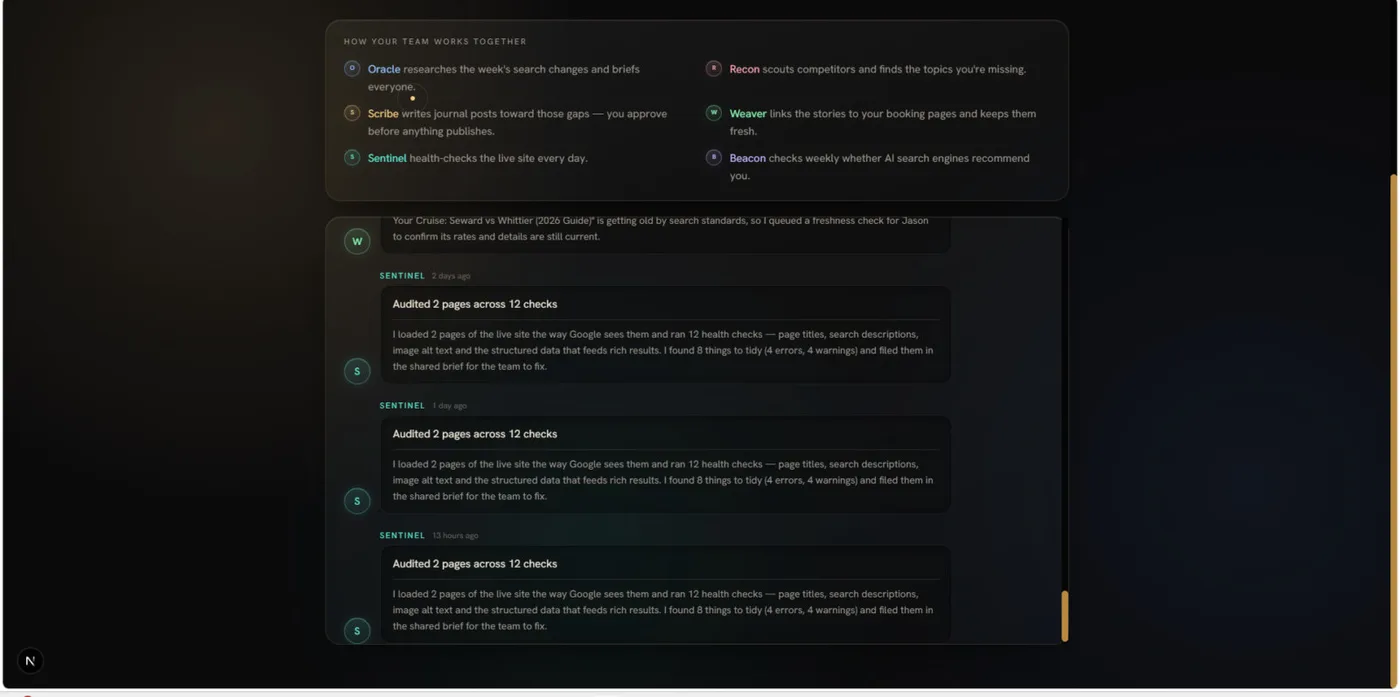
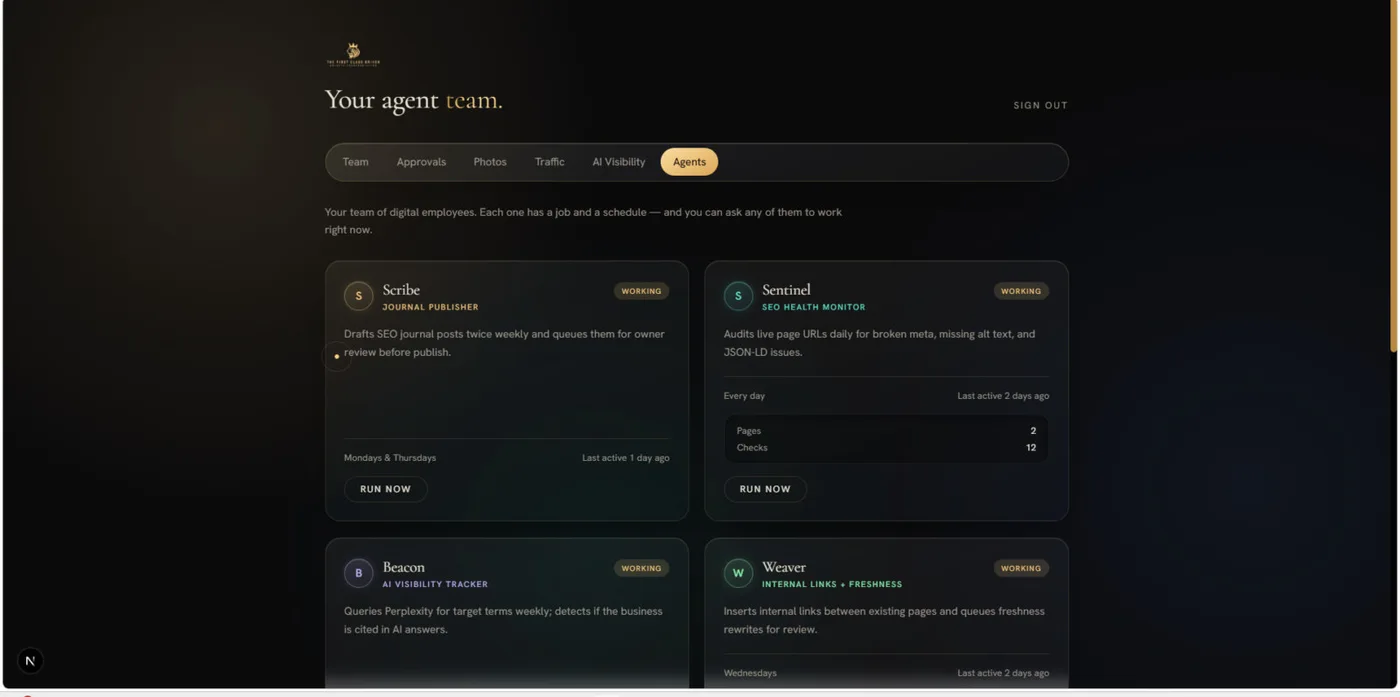
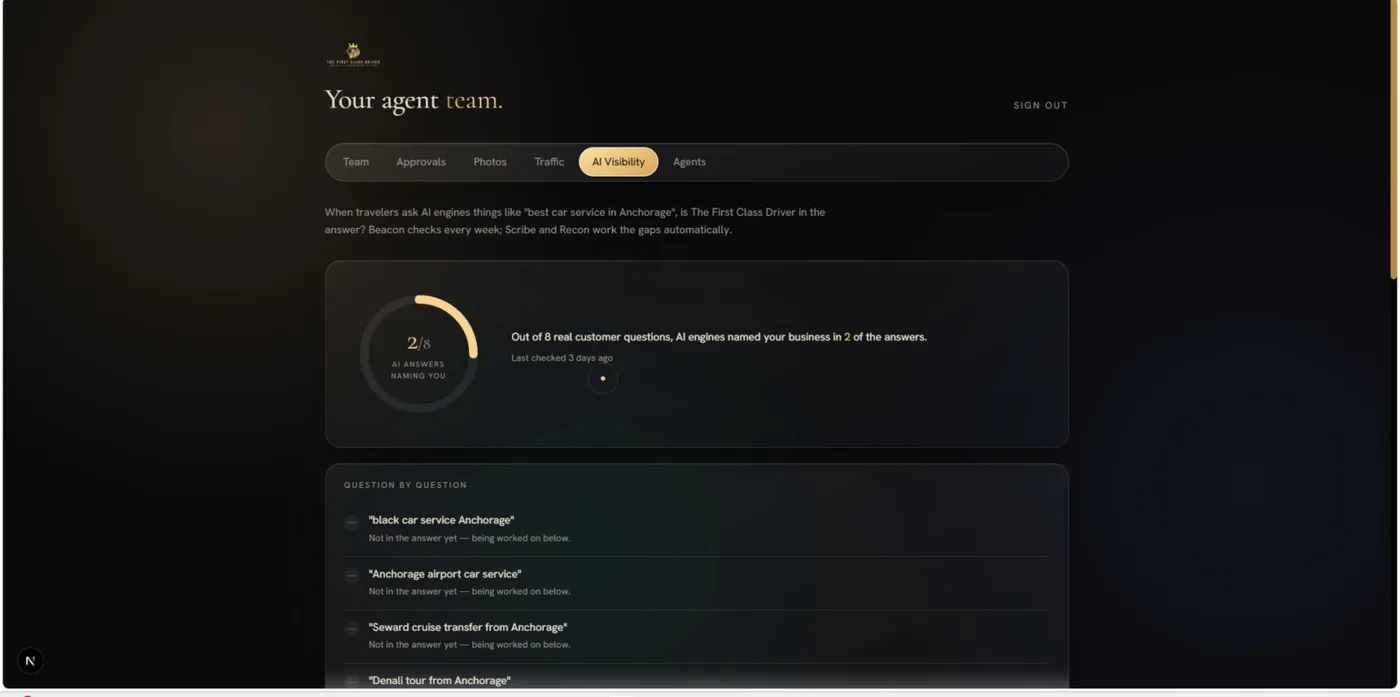
The same agent fleet that runs northtek.io now works for The First Class Driver, tuned to the transportation business. Each agent has a job, a schedule, and a voice. They research, audit, write, and connect, then report what they did in plain English. Beacon's first sweep set the honest baseline: AI engines named the business in 2 of 8 traveler questions. The fleet exists to move that number.
Oracle
Researches the week's search and AI-ranking changes, then briefs the whole team.
Scribe
Writes destination guides in the owner's voice, twice a week. Every draft waits for approval.
Sentinel
Audits the live site daily the way Google sees it: titles, descriptions, alt text, structured data.
Beacon
Asks AI search engines the questions travelers ask, and tracks whether the business gets recommended.
Weaver
Links stories to booking pages and flags aging articles so rates and details stay verified.
Recon
Scouts competitors for topics the site is missing and drafts page ideas for human review.
Team room · verbatim from production
LiveSentinel · daily, 9:00 UTC
"I loaded 2 pages of the live site the way Google sees them and ran 12 health checks - page titles, search descriptions, image alt text and the structured data that feeds rich results. I found 8 things to tidy (4 errors, 4 warnings) and filed them in the shared brief for the team to fix."
Weaver · Wednesdays
"I wove in 9 links connecting Scribe's stories to the booking and service pages, so readers (and Google) can flow from reading to reserving. I also noticed 'Your Cruise: Seward vs Whittier (2026 Guide)' is getting old by search standards, so I queued a freshness check for Jason to confirm its rates and details are still current."
Scribe · Mondays & Thursdays
"Drafted: Perfect Day in Girdwood: Driver's Guide for Visitors (pending review)."
Oracle · Mondays
"Researched the latest SEO and AI-search guidance (18 practices)."
Every entry above is a real action from this client's production system, in the agent's own words.
Part Three
The owner stays in command.
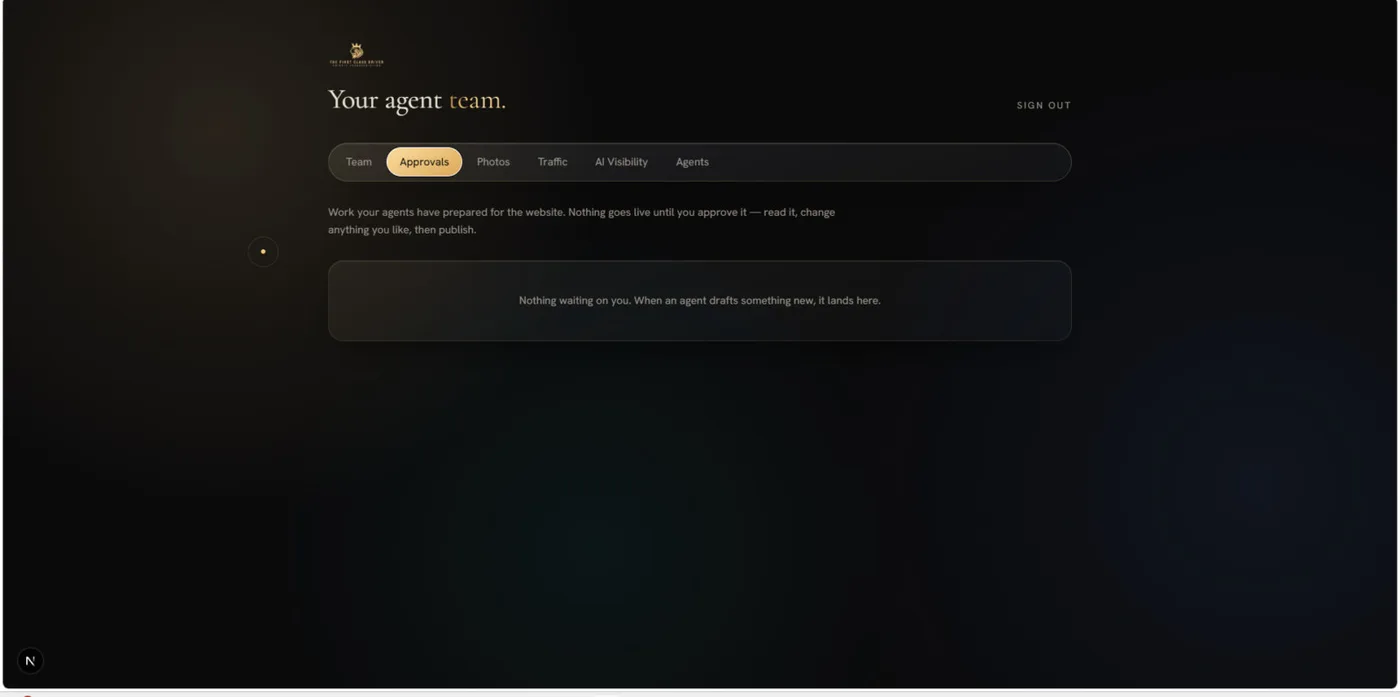
Automation without control is a liability, so the fleet answers to a dashboard built for a driver, not a developer. Jason signs in with one password and watches his team narrate its work in plain English. Anything that would change the website lands in Approvals first: he reads it, edits it if he likes, and publishes with one tap. He can upload fleet photos, check traffic, see whether AI assistants recommend him, and put any agent to work on demand.
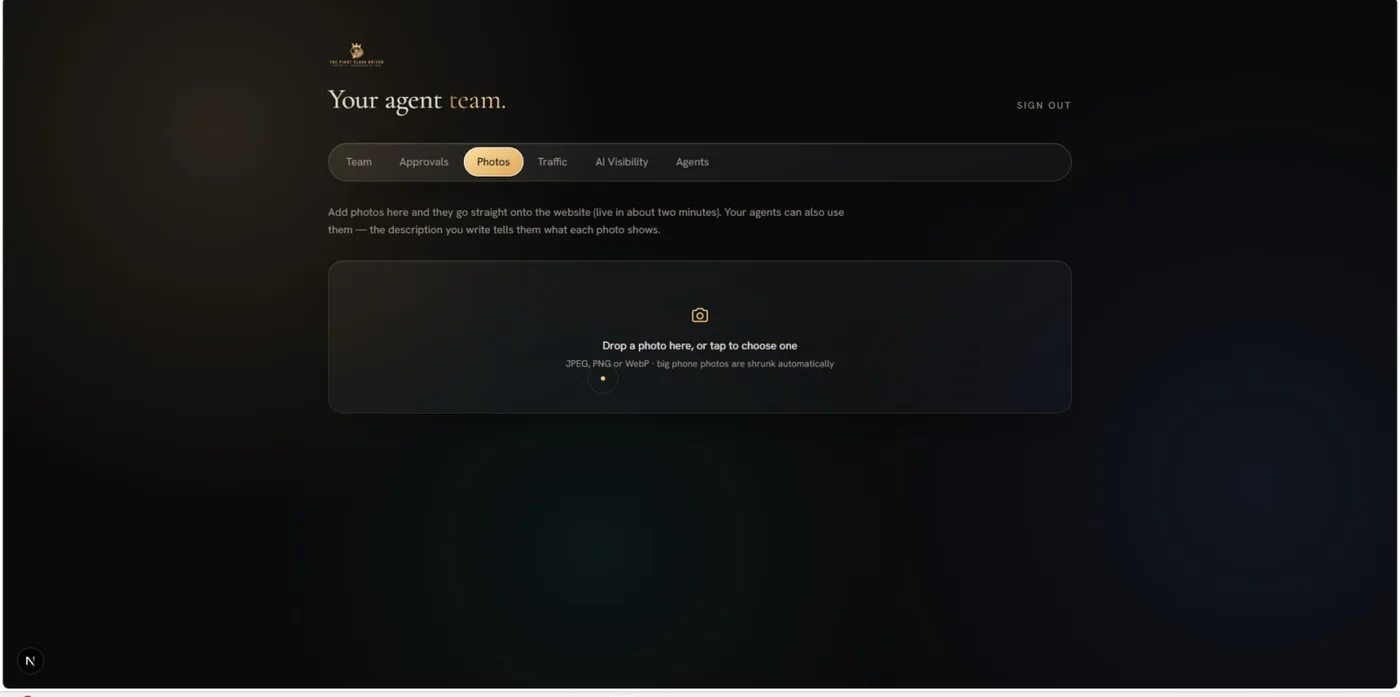
The rule the whole system obeys
Nothing is ever published without the owner.
Drafts queue for review. Approval links arrive by email and expire in 72 hours. A style guard rejects copy that does not sound like Jason. New page ideas never auto-publish; they go to a human team to build properly. The agents earn trust by showing their work, not by asking for it.
Under the Hood
Engineering receipts.
- 01Next.js 15, statically rendered for speed on Alaska's connections
- 02349 automated tests run before any change ships
- 03Structured data on all 60 pages, plus llms.txt for AI crawlers
- 04Daily self-audit of live pages; findings filed to a shared team brief
- 05Weekly AI-visibility tracking across 8 traveler search queries
- 06Owner approval gates, expiring review links, and rate-limited endpoints
- 07Session-authed owner dashboard that fails closed without credentials
- 08Agents commit their own state to version control, off the deploy path
What's Next
Your business could run like this.
This project started with a 30-minute strategy call. We diagnose where leads, conversion, or operational time is leaking, and walk through exactly what we would build. No pitch, no pressure.